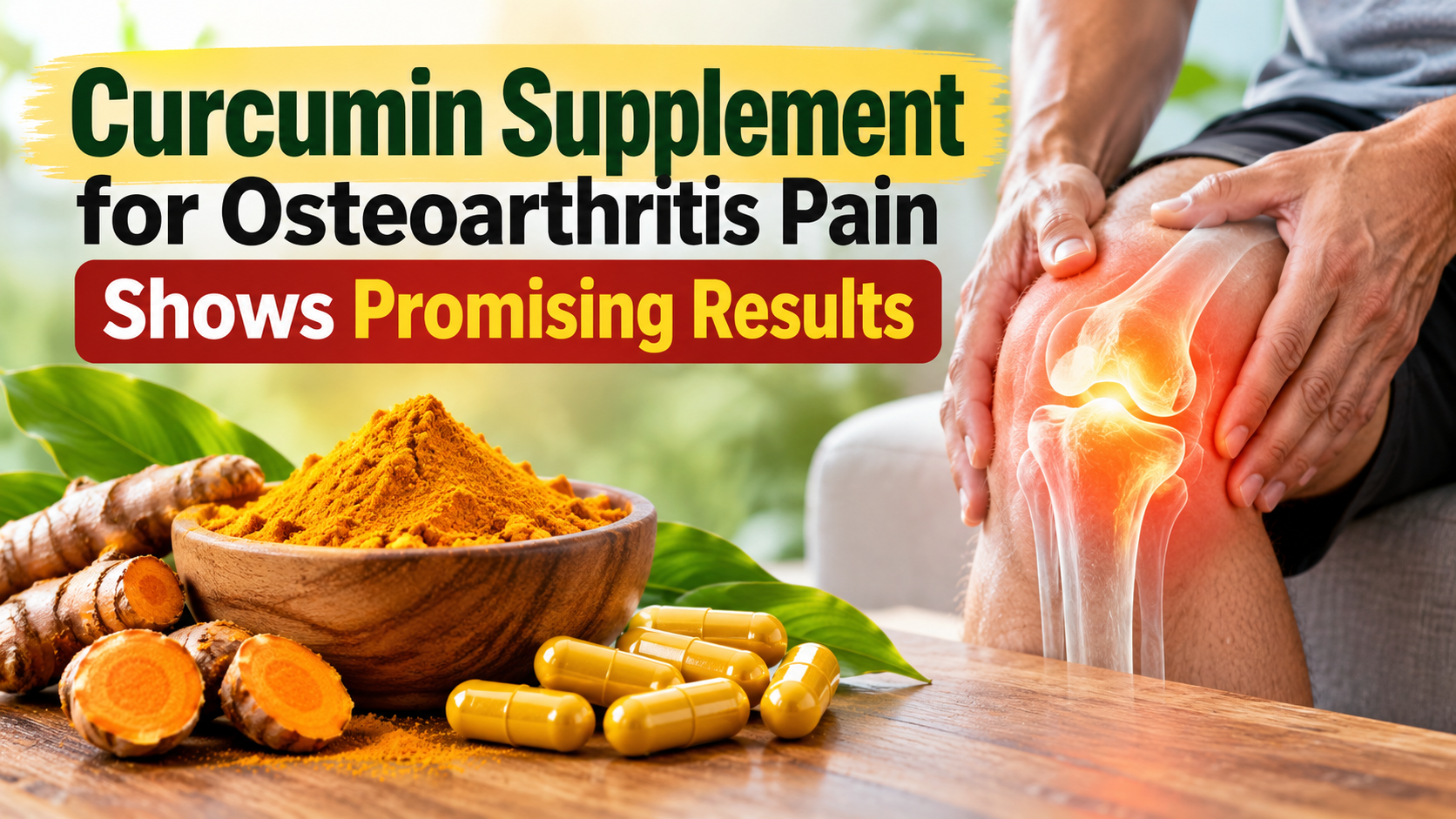
Curcumin supplement for osteoarthritis pain shows promising results
Curcumin, the yellow polyphenol in turmeric (Curcuma longa), has modest but measurable benefits in human trials for joint pain, blood sugar, cholesterol, fatty liver, mood and gut inflammation. It is not a cure-all. Turmeric has been used in Ayurvedic and traditional Chinese medicine for centuries, and curcumin makes up about 2–5% of the dried spice [1]. Over the past two decades, hundreds of randomised controlled trials have tested it in people. This article summarises what those trials show, how curcumin is thought to work, and where the evidence is still weak.
How curcumin works in the body
Most of curcumin's effects trace back to two properties: it dampens inflammation and it limits oxidative stress [1, 2]. At the molecular level, curcumin inhibits NF-κB, a protein complex that switches on inflammatory genes, and lowers enzymes and messengers such as COX-2, TNF-α and IL-6 [2]. It also neutralizes free radicals directly and boosts the body's own antioxidant enzymes, including superoxide dismutase and glutathione [1].
These effects show up in blood tests. A meta-analysis of six randomized trials found that curcuminoids significantly lowered C-reactive protein (CRP), a standard marker of inflammation, especially when given in better-absorbed forms [3]. Because chronic, low-grade inflammation underlies arthritis, diabetes, heart disease and depression, this single mechanism helps explain why curcumin has been tested across so many conditions.
Joint health and arthritis
Arthritis is where curcumin's evidence is strongest. A 2016 meta-analysis of eight randomised trials found that turmeric extracts, typically around 1,000 mg of curcumin a day, reduced pain scores compared with placebo and performed similarly to common pain medicines [4]. In the largest head-to-head study, 367 people with knee osteoarthritis took either 1,500 mg/day of turmeric extract or 1,200 mg/day of ibuprofen for four weeks. The extract was non-inferior for pain and function, and caused fewer episodes of stomach pain [5].
The trials were mostly short and modest in size, so the authors called for larger, longer studies [4]. Still, for people who cannot tolerate anti-inflammatory drugs, curcumin is a reasonable option to discuss with a doctor.
Metabolic health
Curcumin appears to improve several markers tied to diabetes and heart disease, though the effects are moderate.
Blood sugar. In a nine-month, double-blind trial of 240 adults with prediabetes, 16.4% of the placebo group developed type 2 diabetes versus none in the curcumin group, which also showed better insulin-producing β-cell function [6].
Cholesterol. A meta-analysis of randomised trials in people with cardiovascular risk factors found that turmeric and curcumin lowered LDL cholesterol and triglycerides, with no clear effect on HDL [7].
Fatty liver. In a placebo-controlled trial in non-alcoholic fatty liver disease, eight weeks of curcumin reduced liver fat on ultrasound and improved liver enzymes [8].
Weight. A meta-analysis of 21 trials in people with metabolic syndrome found small reductions in body weight, BMI and waist circumference [9].
The diabetes prevention result is striking but comes from a single trial in Thailand and has not yet been replicated at scale.
Mood, depression and brain health
Curcumin shows early promise for mood and memory, mainly as an add-on to standard care. A meta-analysis of six randomised trials in people with depression found that curcumin significantly reduced depressive symptoms and also eased anxiety [10]. Researchers think it works by lowering brain inflammation and supporting serotonin and dopamine signalling.
For memory, an 18-month double-blind trial gave 40 adults aged 51–84 either a well-absorbed curcumin (90 mg twice daily) or placebo. The curcumin group improved on memory and attention tests, and brain scans showed less amyloid and tau build-up in regions linked to memory and mood [11]. The authors stressed that the findings need replication in larger groups.
Gut health, exercise recovery and other benefits
Ulcerative colitis has one of the clearest positive results. In a double-blind trial of 50 patients whose colitis had not responded to maximum-dose mesalamine, adding 3 g of curcumin a day led to remission in 53.8% within four weeks, compared with none on placebo [12]. Because curcumin is poorly absorbed, much of it stays in the gut, which may explain why it works well here.
For active people, a meta-analysis of randomised trials found that curcumin reduced muscle soreness and markers of muscle damage after hard exercise [13]. Smaller studies also suggest benefits for skin conditions and for oral mucositis during cancer treatment, but this evidence is still preliminary [1].
Absorption, safety and limits of the evidence
The biggest practical hurdle is absorption. Curcumin dissolves poorly in water and is broken down quickly by the gut and liver, so very little reaches the bloodstream [14]. Taking it with piperine from black pepper raised blood levels about 20-fold in human volunteers [15]. Many trials above used enhanced forms such as phospholipid complexes, nanoparticles or added turmeric oils.
Curcumin is generally well tolerated, but supplements are not risk-free. A 2023 US analysis identified 10 cases of turmeric-linked liver injury between 2004 and 2022, including one death, with a strong link to the gene variant HLA-B*35:01 [16]. Curcumin may also add to the effects of blood thinners and diabetes drugs.
Some scientists remain sceptical. A widely cited review argued that curcumin's instability and tendency to interfere with lab assays mean many reported effects may be overstated [17]. Many clinical trials are small, short, or funded by supplement makers, so larger independent studies are still needed.
Final call
Curcumin's best-supported benefits are for osteoarthritis pain, where it rivals ibuprofen, and for ulcerative colitis as an add-on to standard therapy. Encouraging but less certain evidence covers blood sugar, cholesterol, fatty liver, depression, memory and exercise recovery. Most of these effects stem from its anti-inflammatory and antioxidant actions. Turmeric in food is a safe, healthy habit. Anyone considering concentrated supplements should check with a doctor first, especially if they take other medicines or have liver problems.
References
- Hewlings SJ, Kalman DS. Curcumin: a review of its effects on human health. Foods. 2017;6(10):92. doi:10.3390/foods6100092
- Aggarwal BB, Harikumar KB. Potential therapeutic effects of curcumin, the anti-inflammatory agent, against neurodegenerative, cardiovascular, pulmonary, metabolic, autoimmune and neoplastic diseases. Int J Biochem Cell Biol. 2009;41(1):40–59. doi:10.1016/j.biocel.2008.06.010
- Sahebkar A. Are curcuminoids effective C-reactive protein-lowering agents in clinical practice? Evidence from a meta-analysis. Phytother Res. 2014;28(5):633–642. doi:10.1002/ptr.5045
- Daily JW, Yang M, Park S. Efficacy of turmeric extracts and curcumin for alleviating the symptoms of joint arthritis: a systematic review and meta-analysis of randomized clinical trials. J Med Food. 2016;19(8):717–729. doi:10.1089/jmf.2016.3705
- Kuptniratsaikul V, Dajpratham P, Taechaarpornkul W, et al. Efficacy and safety of Curcuma domestica extracts compared with ibuprofen in patients with knee osteoarthritis: a multicenter study. Clin Interv Aging. 2014;9:451–458. doi:10.2147/CIA.S58535
- Chuengsamarn S, Rattanamongkolgul S, Luechapudiporn R, et al. Curcumin extract for prevention of type 2 diabetes. Diabetes Care. 2012;35(11):2121–2127. doi:10.2337/dc12-0116
- Qin S, Huang L, Gong J, et al. Efficacy and safety of turmeric and curcumin in lowering blood lipid levels in patients with cardiovascular risk factors: a meta-analysis of randomized controlled trials. Nutr J. 2017;16(1):68. doi:10.1186/s12937-017-0293-y
- Rahmani S, Asgary S, Askari G, et al. Treatment of non-alcoholic fatty liver disease with curcumin: a randomized placebo-controlled trial. Phytother Res. 2016;30(9):1540–1548. doi:10.1002/ptr.5659
- Akbari M, Lankarani KB, Tabrizi R, et al. The effects of curcumin on weight loss among patients with metabolic syndrome and related disorders: a systematic review and meta-analysis of randomized controlled trials. Front Pharmacol. 2019;10:649. doi:10.3389/fphar.2019.00649
- Ng QX, Koh SSH, Chan HW, Ho CYX. Clinical use of curcumin in depression: a meta-analysis. J Am Med Dir Assoc. 2017;18(6):503–508. doi:10.1016/j.jamda.2016.12.071
- Small GW, Siddarth P, Li Z, et al. Memory and brain amyloid and tau effects of a bioavailable form of curcumin in non-demented adults: a double-blind, placebo-controlled 18-month trial. Am J Geriatr Psychiatry. 2018;26(3):266–277. doi:10.1016/j.jagp.2017.10.010
- Lang A, Salomon N, Wu JCY, et al. Curcumin in combination with mesalamine induces remission in patients with mild-to-moderate ulcerative colitis in a randomized controlled trial. Clin Gastroenterol Hepatol. 2015;13(8):1444–1449. doi:10.1016/j.cgh.2015.02.019
- Fang W, Nasir Y. The effect of curcumin supplementation on recovery following exercise-induced muscle damage and delayed-onset muscle soreness: a systematic review and meta-analysis of randomized controlled trials. Phytother Res. 2021;35(4):1768–1781. doi:10.1002/ptr.6912
- Anand P, Kunnumakkara AB, Newman RA, Aggarwal BB. Bioavailability of curcumin: problems and promises. Mol Pharm. 2007;4(6):807–818. doi:10.1021/mp700113r
- Shoba G, Joy D, Joseph T, et al. Influence of piperine on the pharmacokinetics of curcumin in animals and human volunteers. Planta Med. 1998;64(4):353–356. doi:10.1055/s-2006-957450
- Halegoua-DeMarzio D, Navarro V, Ahmad J, et al. Liver injury associated with turmeric — a growing problem: ten cases from the Drug-Induced Liver Injury Network (DILIN). Am J Med. 2023;136(2):200–206. doi:10.1016/j.amjmed.2022.09.026
- Nelson KM, Dahlin JL, Bisson J, et al. The essential medicinal chemistry of curcumin. J Med Chem. 2017;60(5):1620–1637. doi:10.1021/acs.jmedchem.6b00975